Learning Management Systems (LMS): Top Platforms for Corporate Training in 2026
Compare 12 corporate LMS platforms for 2026, with pricing, feature fit, implementation trade-offs, and a practical buyer guide.
 Admin
Admin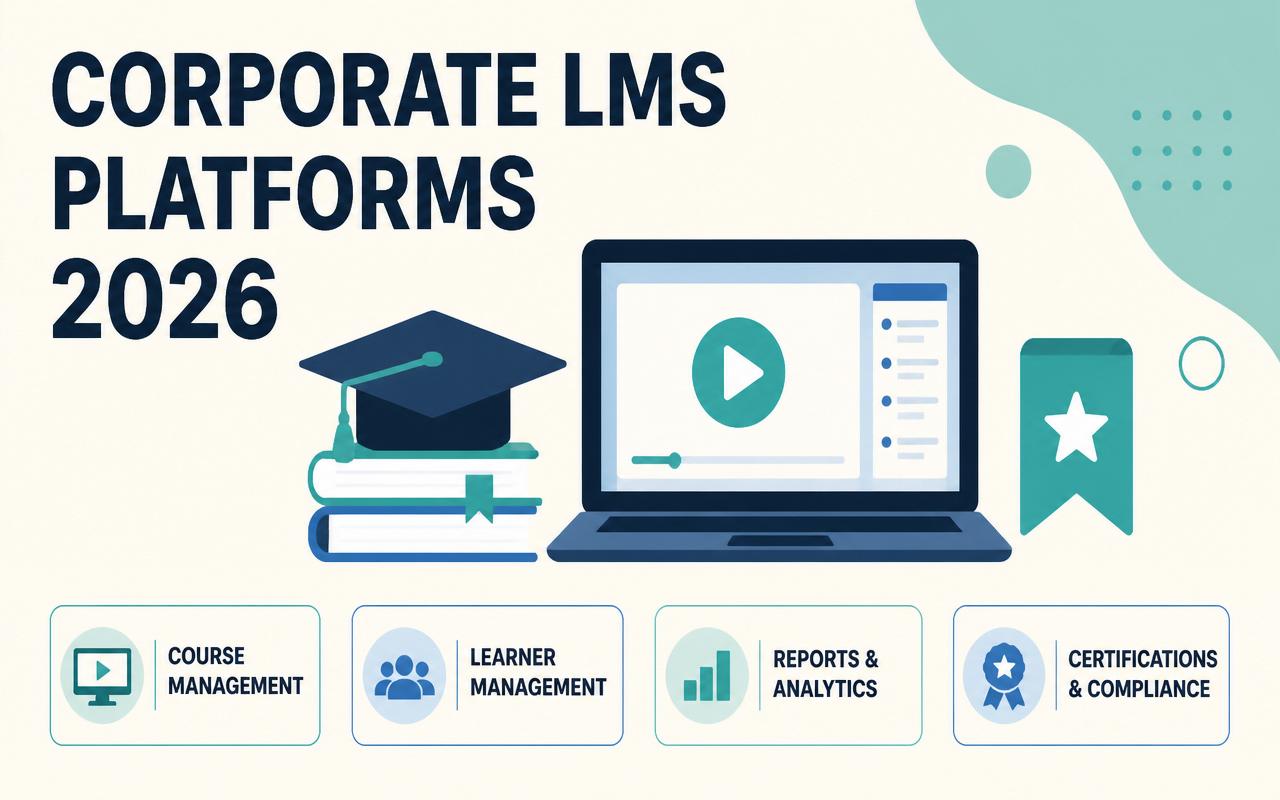
Corporate training usually breaks down for a boring reason: the system can’t keep up with how work actually runs. New hires need onboarding on day one, managers need role-based training by region, compliance teams need proof, and L&D needs reporting that doesn’t take two analysts and a spreadsheet. In 2026, the right LMS is less about hosting courses and more about managing assignments, skills, certifications, content sources, and integrations without turning every update into a project. The platforms below are the ones most likely to hold up when training has to serve sales, customer support, operations, and compliance at the same time.
Why corporate LMS platforms matters in 2026
A corporate LMS has become the system that connects training, compliance, and workforce readiness. The buyer question is no longer whether to digitize learning; it is whether the platform can adapt to faster staffing changes, tighter audit demands, and more distributed teams.
- Hybrid and distributed workforces need consistent onboarding and recurring training without relying on local managers to improvise.
- Compliance teams want audit trails, due dates, attestations, and completion evidence that can survive a review.
- L&D teams need role-based learning paths, not just course libraries, so training follows job function and geography.
- Managers expect simple assignment workflows, progress visibility, and reminders they do not have to chase manually.
- Integrations matter more than ever because HRIS, CRM, identity, and ticketing systems often trigger training events.
- Reporting has to reach beyond completion rates and show gaps by team, location, or certification status.
The 10-12 corporate LMS platforms to watch in 2026
Docebo
Docebo
- Automated enrollment rules and learning plans
- Skills management and content recommendations
- Extended enterprise support for customers and partners
- Integrations with HR, CRM, and conferencing tools
Pricing is quote-based; contact sales for pricing. Best for mid-market and enterprise teams that need automation and multi-audience training.
TalentLMS
TalentLMS
- Course authoring and reusable learning paths
- Branching for different teams or audiences
- Built-in assessments and certificates
- Integrations with common business tools
Starts around $109/month (verify current pricing). Best for small business and lean L&D teams that need a straightforward LMS.
Absorb LMS
Absorb LMS
- Role-based dashboards and enrollment logic
- eCommerce and extended enterprise capabilities
- Automated reporting and scheduled analytics
- Integrations for HR, SSO, and conferencing
Pricing is quote-based; contact sales for pricing. Best for mid-market organizations with mixed internal and external training needs.
Litmos
Litmos
- Prebuilt course libraries and content options
- Automated assignments and certifications
- Reporting for completions and overdue training
- Integrations with business systems and single sign-on
Pricing is quote-based; contact sales for pricing. Best for mid-market teams that want quick deployment and standard corporate training workflows.
Cornerstone OnDemand
Cornerstone OnDemand
- Learning, skills, and talent suite alignment
- Compliance and certification management
- Advanced reporting and governance controls
- Support for global, multi-entity deployments
Pricing is quote-based; contact sales for pricing. Best for enterprise buyers that want learning connected to broader talent management.
Moodle Workplace
Moodle Workplace
- Multi-tenancy and organizational structures
- Custom dashboards and learning plans
- Automation for enrollment and completion
- Deployment options with strong configurability
Pricing is quote-based; contact sales for pricing. Best for organizations that want flexibility and can support a more hands-on setup.
LearnUpon
LearnUpon
- Multi-audience learning portals
- Automated enrollments and learning journeys
- Certificates and scheduled reporting
- Integrations for SSO, HR, CRM, and web conferencing
Pricing is quote-based; contact sales for pricing. Best for mid-market companies running employee and customer training together.
360Learning
360Learning
- Collaborative course creation workflows
- Peer review and SME contribution
- Assignment and learner engagement tracking
- Integrations with HR and productivity tools
Pricing is quote-based; contact sales for pricing. Best for fast-moving teams that want internal experts to help build training.
iSpring Learn
iSpring Learn
- Course management and learning paths
- Integration with iSpring authoring tools
- Automated assignments and certificates
- Mobile access and reporting dashboards
Starts around $2.29/user/month (verify current pricing). Best for small and mid-market teams that produce training content in-house.
Lessonly (Seismic)
Lessonly (Seismic)
- Practice exercises and coaching workflows
- Assignment and skill reinforcement
- Team-based visibility for managers
- Useful for sales and customer service training
Pricing is quote-based; contact sales for pricing. Best for revenue and support teams focused on performance practice and coaching.
Bridge
Bridge
- Learning and performance workflows
- Career development and growth paths
- Manager-focused coaching tools
- Simple learner and admin experience
Pricing is quote-based; contact sales for pricing. Best for mid-market teams that want development and performance in one system.
SAP SuccessFactors Learning
SAP SuccessFactors Learning
- Enterprise-grade assignment and compliance controls
- Integration with broader SAP SuccessFactors suite
- Global workforce support and localization
- Detailed reporting and administrative governance
Pricing is quote-based; contact sales for pricing. Best for enterprise buyers already standardized on SAP or needing global HR alignment.
Comparison table
| Tool | Starting price | Best for | Standout feature |
|---|---|---|---|
| Docebo | Contact sales | Mid-market to enterprise multi-audience training | Automation and skills-based recommendations |
| TalentLMS | Starts around $109/month (verify current pricing) | Small business and lean teams | Fast rollout with simple administration |
| Absorb LMS | Contact sales | Mid-market extended enterprise training | Strong learner experience for internal and external audiences |
| Litmos | Contact sales | Mid-market corporate training | Quick deployment and standard workflows |
| Cornerstone OnDemand | Contact sales | Enterprise talent and learning | Learning tied to broader talent management |
| Moodle Workplace | Contact sales | Organizations wanting flexible deployment | Highly configurable multi-tenant structure |
| LearnUpon | Contact sales | Employee, partner, and customer training | Clear multi-audience portal management |
| 360Learning | Contact sales | Collaborative internal training | SME-driven course creation |
| iSpring Learn | Starts around $2.29/user/month (verify current pricing) | Small to mid-market in-house content teams | Pairing with iSpring authoring tools |
| Bridge | Contact sales | Mid-market development-focused teams | Learning connected to performance and coaching |
| SAP SuccessFactors Learning | Contact sales | Global enterprise training | HR suite integration and governance |
| Lessonly (Seismic) | Contact sales | Sales and service enablement | Practice and coaching workflows |
How to choose the right corporate LMS platforms
- Match the platform to the job: compliance-heavy businesses need audit trails and certifications, while enablement teams may care more about practice, coaching, and content workflows.
- Check whether the LMS supports your real audience mix: employees only, or employees plus contractors, partners, and customers.
- Review integrations before buying: HRIS, SSO, CRM, identity provider, conferencing, and content libraries can make or break admin effort.
- Ask how reporting works at the level you actually need: location, role, manager, certification, and overdue assignments, not just completions.
- Confirm deployment and data requirements, including hosting region, data residency, and security review process if you operate in regulated markets.
- Look at support and service levels, especially if your team lacks a dedicated LMS admin or if the rollout covers multiple business units.
Suggested stack by company size
Small business / low budget
- TalentLMS
- iSpring Learn
- Litmos
- LearnUpon
Mid-market or agency
- Docebo
- Absorb LMS
- LearnUpon
- 360Learning
Enterprise
- Cornerstone OnDemand
- SAP SuccessFactors Learning
- Docebo
- Moodle Workplace
Trends to watch in corporate LMS platforms for 2026
- More systems are using role and skill inference from HR data so assignments can trigger from job changes without manual admin work.
- Managers want learning nudges tied to performance cycles, probation periods, and certification renewals, not just generic reminders.
- Extended enterprise programs are pushing better portal separation for customers, partners, and contractors inside one instance.
- Content sourcing is getting more modular, with libraries, SME uploads, and internal microcontent living alongside formal courses.
- Reporting is shifting toward operational dashboards that show overdue risk, cohort progress, and certification exposure by team.
- Integrations are moving deeper into HRIS, identity, CRM, and collaboration tools so training follows employee lifecycle events automatically.
I learned the hard way that most LMS failures start with permissions, not content. On one rollout, we spent weeks cleaning up a bad role map because managers could not see the right learners and region admins were locked out of basic reporting. The vendor demo had looked perfect, but we had not mapped who would own assignments, who would approve content, and which fields in the HRIS would drive enrollment. The trade-off was clear: if you want automation, you have to be ruthless about data structure before launch.
FAQs
What is the difference between a corporate LMS and an employee training platform?
A corporate LMS usually emphasizes assignment, tracking, compliance, and reporting. Some employee training platforms add coaching, content libraries, or performance features, but the LMS remains the system of record for learning completion.
Which LMS is best for compliance training?
Cornerstone OnDemand, SAP SuccessFactors Learning, Absorb LMS, and Litmos are common fits because they handle certifications, due dates, and reporting well. The best choice depends on your audit needs and whether you also need partner or customer training.
What is the easiest LMS to implement?
TalentLMS and iSpring Learn are often among the easier systems to launch because they are lighter to configure and simpler for admins. Ease still depends on your user roles, integrations, and content structure.
How do I choose between Docebo and LearnUpon?
Docebo is stronger when you want more automation, skills logic, and a broader enterprise feel. LearnUpon is often easier to manage for multi-audience training when simplicity and portal organization matter most.
Do small companies need an LMS with SSO and HR integrations?
Not always on day one, but they usually need them sooner than expected. If you plan to assign training from job title, location, or hire date, integrations save a lot of manual admin work.
If you are narrowing the list, start with your training workload, not the feature checklist. A team that runs compliance, onboarding, and partner education will need a different system than a sales organization that mainly wants coaching and reinforcement. Shortlist three platforms, map one real use case end to end, and test the admin work as hard as the learner experience. Pay close attention to permissions, reporting, and integrations before you sign. If the system cannot handle those parts cleanly, the rest of the platform will not matter for long.
Pricing sources
All prices cited in this article are taken from each vendor's official pricing page. Vendors update pricing frequently — always confirm the current rate with the source before purchasing.
Related articles
Business Intelligence Dashboards: Top BI Tools for Non-Technical Teams in 2026
Compare BI dashboard tools for non-technical teams in 2026, with pricing, fit, and practical guidance for small and mid-market buyers.
Admin