Affiliate Marketing Software Every Growing Brand Should Consider in 2026
Compare affiliate marketing software for 2026, from referral tracking to enterprise partner ops, with pricing, features, and buyer guidance.
 Admin
Admin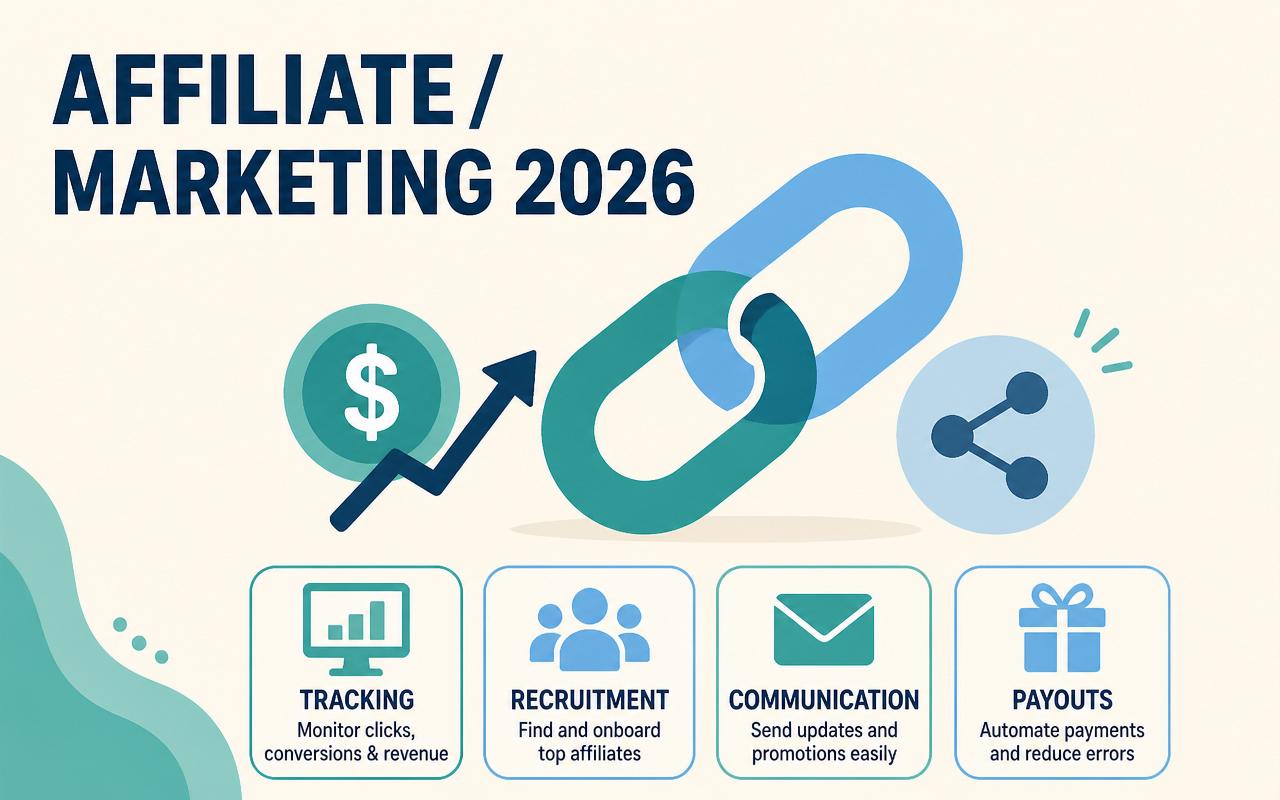
Affiliate programs are getting harder to run with spreadsheets and generic plug-ins. By 2026, growing brands need software that can track multi-touch attribution, automate partner payouts, flag fraud, and keep creators, affiliates, and referral partners from tripping over each other. The real problem is not finding people willing to promote your product; it is proving who drove the sale, paying them on time, and keeping finance, marketing, and RevOps aligned when channels overlap. The right platform reduces manual reconciliation, gives partners a usable dashboard, and lets you change commission rules without rebuilding the program every quarter. For teams with lean headcount, that operational clarity matters more than flashy reporting.
Why affiliate marketing software matters in 2026
Affiliate programs now sit closer to revenue operations than to simple campaign marketing. The software has to handle attribution, compliance, and partner experience without adding work for the finance team.
- More brands are mixing affiliates, creators, referral partners, and resellers in one motion, which makes rule-based commission logic more important.
- Cookie-only tracking is weaker than it used to be, so server-side tracking, coupon tracking, and first-party data capture matter more.
- Finance teams want cleaner payout workflows, tax handling, and audit trails instead of monthly spreadsheet exports.
- Partner managers need self-serve onboarding, asset distribution, and performance visibility so they can scale without adding headcount.
- Fraud detection matters more as programs grow, especially for coupon poaching, self-referrals, and suspicious lead patterns.
- SaaS, ecommerce, and marketplaces all need different structures, so flexible software beats one-size-fits-all referral tools.
The 10-12 affiliate marketing software to watch in 2026
Impact
Impact is built for teams that treat partnerships as a serious revenue channel, not a side program. It supports affiliates, influencers, referral partners, and even commerce partnerships in one system, which helps when your go-to-market motion spans more than standard referral links. The platform is strongest when you need detailed contract logic, automated partner discovery, and strong reporting across channels. It is usually the first pick for teams that have outgrown lightweight tracking and need governance, approvals, and scale.
- Cross-channel partner tracking and attribution
- Custom contract terms and commission rules
- Partner discovery and recruitment workflows
- Automation for approvals, validation, and payouts
Contact sales for pricing; best fit is mid-market and enterprise brands running multiple partner types.
PartnerStack
PartnerStack is a strong choice for SaaS companies that want partner programs to feel structured from day one. It is especially useful for managing affiliates, resellers, and referral partners in a way that looks organized to outside partners, not just to internal admins. The platform leans into partner recruitment, onboarding, and lifecycle management, which makes it a good option for companies that care about partner experience and not just link tracking. It is common in B2B SaaS because it maps well to recurring revenue and longer sales cycles.
- Partner onboarding and education flows
- Recurring commission support for SaaS
- Partner marketplace and recruitment tools
- Performance dashboards for partners and admins
Contact sales for pricing; best fit is B2B SaaS teams building a managed partner ecosystem.
Refersion
Refersion works well for ecommerce brands that need affiliate tracking without a heavy implementation project. It gives merchants a practical way to track conversions from affiliates, influencers, and ambassadors while keeping the interface relatively approachable. The platform is often chosen by teams that want quick launch, decent automation, and a partner portal without enterprise complexity. It is not the deepest system on this list, but for many growing stores, it is the right balance of usability and control.
- Affiliate and influencer tracking for ecommerce
- Promo code and link-based attribution
- Partner portal with commission visibility
- Integration support for major commerce platforms
Starts around $99/month (verify current pricing); best fit is growing ecommerce brands that want a straightforward affiliate platform.
Post Affiliate Pro
Post Affiliate Pro has been around long enough to be trusted by teams that want configurability over polish. It is a strong fit when you need many commission structures, campaign rules, or custom tracking setups and are willing to spend time tuning the system. The platform appeals to operators who care about control and breadth of features, especially when they run several affiliate campaigns or multiple storefronts. If your priority is flexibility and you have someone who can manage the setup, it remains a practical option.
- Multiple commission types and campaign rules
- Coupon, link, and lifetime tracking support
- Fraud protection and reporting tools
- Integration options for ecommerce and custom stacks
Starts around $129/month (verify current pricing); best fit is teams that want deep configurability without moving to enterprise software.
Tapfiliate
Tapfiliate is a good middle-ground platform for brands that want a clean launch path and manageable admin work. It is often used by startups and smaller teams that need tracking for affiliates, referrals, and ambassadors without building their own system. The product tends to appeal to operators who value a simple setup, branded partner experience, and enough flexibility to support both direct sales and ecommerce use cases. It is especially useful when marketing owns the program and needs something that does not require a dedicated ops function.
- Affiliate, referral, and ambassador tracking
- Custom branding for partner portals
- Recurring commission support
- Integrations with commerce and SaaS tools
Starts around $89/month (verify current pricing); best fit is startups and small teams launching their first serious partner program.
Everflow
Everflow is built for performance marketers who want detailed tracking, strong reporting, and the ability to manage many partner relationships at once. It is often selected by teams that care about click-level visibility, offer management, and fraud controls across paid and affiliate channels. The platform has a reputation for being powerful, which usually means it rewards experienced operators more than casual users. If your program depends on granular attribution and fast optimization, Everflow is one of the more capable options.
- Click, conversion, and event tracking
- Offer and partner management tools
- Fraud detection and traffic quality controls
- Detailed reporting for performance optimization
Contact sales for pricing; best fit is performance-heavy teams and agencies managing complex affiliate traffic.
AffiliateWP
AffiliateWP is a strong fit for WordPress-based businesses that want to run an affiliate program without leaving their existing site stack. Because it lives inside WordPress, it works well for teams that already manage content, checkout, or membership flows there. The appeal is control: you own the environment, the branding, and much of the logic. That makes it a solid choice for lean teams that prefer a plugin model and have the technical confidence to manage WordPress properly.
- Native WordPress integration
- Referral tracking and affiliate dashboards
- Commission rules and payout support
- Add-ons for form, ecommerce, and membership plugins
Starts around $149/year (verify current pricing); best fit is WordPress businesses and membership sites.
LeadDyno
LeadDyno is aimed at companies that want affiliate and referral management without a lot of setup friction. It is often used by smaller ecommerce and subscription brands that need straightforward tracking, automated emails, and a partner-facing portal. The platform is practical rather than flashy, which is useful when your team wants to launch quickly and keep the program manageable. It is a sensible option if you want a clear path from signup to payout without buying a large-scale partner management suite.
- Affiliate and referral tracking
- Automated partner email workflows
- Simple dashboard for affiliates and admins
- Integrations with ecommerce and subscription tools
Starts around $49/month (verify current pricing); best fit is small teams wanting an affordable, simple launch.
CJ (Commission Junction)
CJ remains one of the largest affiliate networks for brands that want access to a broad publisher base. Unlike standalone tracking tools, CJ combines network access with program management, which can speed up partner recruitment if you are ready to work with an established marketplace. It is often chosen by larger consumer brands that need scale, trusted infrastructure, and a mature publisher ecosystem. The trade-off is less flexibility than some direct-to-brand platforms and more dependence on network norms.
- Large publisher and advertiser network
- Program management tools
- Reporting for traffic and conversions
- Established affiliate ecosystem and recruitment access
Contact sales for pricing; best fit is larger brands that want a network plus management platform.
ShareASale
ShareASale is still relevant for brands that want access to a broad affiliate network with relatively approachable program management. It has long been used by ecommerce merchants that need discovery, tracking, and partner relationships in one place. The platform is familiar to many affiliates, which can shorten recruitment time, especially for consumer brands. For teams that value reach and a well-known network more than advanced custom logic, it remains a viable choice.
- Affiliate network access
- Program setup and management tools
- Merchant reporting and tracking
- Broad partner familiarity in ecommerce
Contact sales for pricing; best fit is ecommerce brands that want network exposure and standard affiliate operations.
Rewardful
Rewardful is designed for SaaS companies that need subscription-friendly affiliate and referral tracking without heavy implementation. It connects well with billing systems and is especially appealing to founders and lean growth teams that want a quick rollout. The software focuses on recurring commissions, coupon attribution, and low-friction partner management, which makes it a common fit for bootstrapped and early-growth software companies. It is a clean option when you care more about speed than advanced enterprise workflow design.
- Recurring commissions for subscriptions
- Coupon and link attribution
- Quick setup for SaaS billing workflows
- Simple partner dashboards and reporting
Starts around $49/month (verify current pricing); best fit is SaaS startups and small subscription businesses.
UpPromote
UpPromote is a strong Shopify-oriented option for merchants that want flexibility without moving into enterprise territory. It supports affiliate, referral, and influencer programs with a practical set of automations, which makes it appealing to ecommerce teams juggling multiple promotional motions. The platform is often used by stores that want a feature-rich app inside Shopify rather than a separate system to maintain. It is a reasonable pick if your store lives in Shopify and you want fast deployment with room to grow.
- Shopify-focused affiliate and referral tools
- Coupon and link tracking
- Automated commission workflows
- Partner portal and influencer-friendly features
Starts around $29.99/month (verify current pricing); best fit is Shopify brands that want an affordable, flexible program.
Comparison table
| Tool | Starting price | Best for | Standout feature |
|---|---|---|---|
| Impact | Contact sales | Mid-market and enterprise partner programs | Cross-channel partner tracking and custom contract logic |
| PartnerStack | Contact sales | B2B SaaS partner ecosystems | Partner onboarding and recurring commissions |
| Refersion | Starts around $99/month (verify current pricing) | Growing ecommerce brands | Simple affiliate and influencer tracking |
| Post Affiliate Pro | Starts around $129/month (verify current pricing) | Teams needing deep configurability | Flexible commission structures |
| Tapfiliate | Starts around $89/month (verify current pricing) | Startups and small teams | Branded partner portals |
| Everflow | Contact sales | Performance-heavy teams and agencies | Click-level tracking and fraud controls |
| Rewardful | Starts around $49/month (verify current pricing) | SaaS startups | Recurring commissions for subscriptions |
How to choose the right affiliate marketing software
- Match the software to your revenue model: SaaS subscriptions, ecommerce orders, lead gen, or hybrid programs each need different attribution and commission logic.
- Check whether you need a standalone platform or a network plus platform model. Network access can help with recruitment, but direct control is usually better for custom terms.
- Review integrations with your billing, ecommerce, CRM, and analytics stack. If finance still exports CSVs every month, the workflow is not really solved.
- Estimate how many partners you will manage in 12 months, not today. A tool that works for 20 affiliates may become painful at 200.
- Ask how the platform handles fraud, coupon abuse, self-referrals, duplicate conversions, and manual approvals.
- Confirm support expectations, onboarding help, and SLA coverage if your program is a meaningful revenue channel.
Suggested stack by company size
Small business / low budget
Smaller teams need software that launches fast, keeps admin light, and does not require a dedicated partner manager. The best fit is usually a focused platform with enough automation to avoid manual payouts and enough branding to make the program feel credible to partners.
- Rewardful
- Tapfiliate
- UpPromote
- AffiliateWP
Mid-market or agency
Mid-market brands and agencies usually need deeper reporting, multiple client or brand views, and better controls over commissions and approvals. This is where flexibility and operational discipline start to matter as much as ease of use.
- Impact
- Everflow
- PartnerStack
- Refersion
Enterprise
Enterprise teams need governance, legal review, complex partner contracts, and enough reporting depth to support finance and channel leadership. At that stage, the platform has to fit the process, not the other way around.
- Impact
- PartnerStack
- CJ (Commission Junction)
- ShareASale
Trends to watch in affiliate marketing software for 2026
- Server-side and first-party tracking are becoming table stakes as browser restrictions continue to weaken last-click cookie reliance.
- Partner portals are getting more self-serve, with assets, payout details, and training content exposed without admin intervention.
- Commission logic is becoming more nuanced, including tiered payouts, recurring revenue splits, and partner-type-specific rules.
- Fraud checks are moving earlier in the workflow, with risk scoring on clicks, leads, and coupon use before payouts are approved.
- More platforms are connecting directly to billing systems and revenue data so finance can reconcile commissions without manual spreadsheet work.
- Brands are expecting better role-based permissions and approval chains because partner programs now touch marketing, finance, legal, and RevOps.
I learned the hard way that affiliate software usually breaks at the edges, not the core. The setup looked fine until we mapped a real payout cycle: one commission rule for trials that converted after 45 days, another for coupon-driven orders, and a third for agency partners on a custom rate. We had not planned enough time for attribution windows, duplicate contacts, and the finance review step, so the first payout run turned into cleanup. The fix was simple but painful: define the commission policy before import, test three real partner scenarios, and make sure the CRM, billing system, and affiliate platform agree on the same conversion event.
FAQs
What is affiliate marketing software used for?
It tracks partner-driven sales or leads, calculates commissions, manages payouts, and gives affiliates or partners a dashboard to monitor performance.
Is affiliate software different from referral software?
Yes. Referral software usually focuses on customer referrals and simple reward loops, while affiliate software is built for outside partners, commission logic, and broader tracking needs.
What matters more in 2026: tracking or payouts?
Both matter, but payouts create the most operational pain. A platform that tracks well but makes reconciliation hard will still create work for finance and partner managers.
Can one platform handle affiliates and influencers?
Some can. Impact, PartnerStack, Refersion, Tapfiliate, and UpPromote can support mixed partner programs, but the best choice depends on how complex your rules and reporting need to be.
What should a growing brand test before buying?
Test attribution accuracy, coupon handling, payout exports, partner onboarding, and your core integrations. A demo is not enough if the real workflow includes billing, CRM, and finance approval.
If you are choosing affiliate marketing software for 2026, start with the work your team actually has to do every month: recruit partners, track conversions, approve commissions, and reconcile payouts. Then match that workflow to the least complicated tool that can handle your revenue model. For a SaaS company, that may be Rewardful or PartnerStack. For an ecommerce brand, Refersion or UpPromote may be enough. For larger partner programs, Impact or Everflow usually deserves a closer look. Build a shortlist, map your commission rules, and run a live test with real traffic before you sign anything. That will tell you more than a feature matrix ever will.
Pricing sources
All prices cited in this article are taken from each vendor's official pricing page. Vendors update pricing frequently — always confirm the current rate with the source before purchasing.
Related articles
Online Survey & Feedback Tools: Best Options for Customer Insights in 2026
Compare the best online survey and feedback tools for 2026, with pricing, use cases, features, and a practical buyer’s guide.
Admin
Customer Loyalty & Rewards Platforms for Retail Brands in 2026
Compare 2026 loyalty and rewards platforms for retail brands, with pricing, features, use cases, and selection advice.
Admin
Social Media Management Platforms: A 2026 Buyer's Guide
Compare 12 social media management platforms for 2026, with pricing, best-fit use cases, and a practical buyer framework.
Admin