Contract Lifecycle Management Software for Growing Companies in 2026
Compare contract lifecycle management software for growing companies in 2026, including pricing, best-fit buyers, and implementation pitfalls.
 Admin
Admin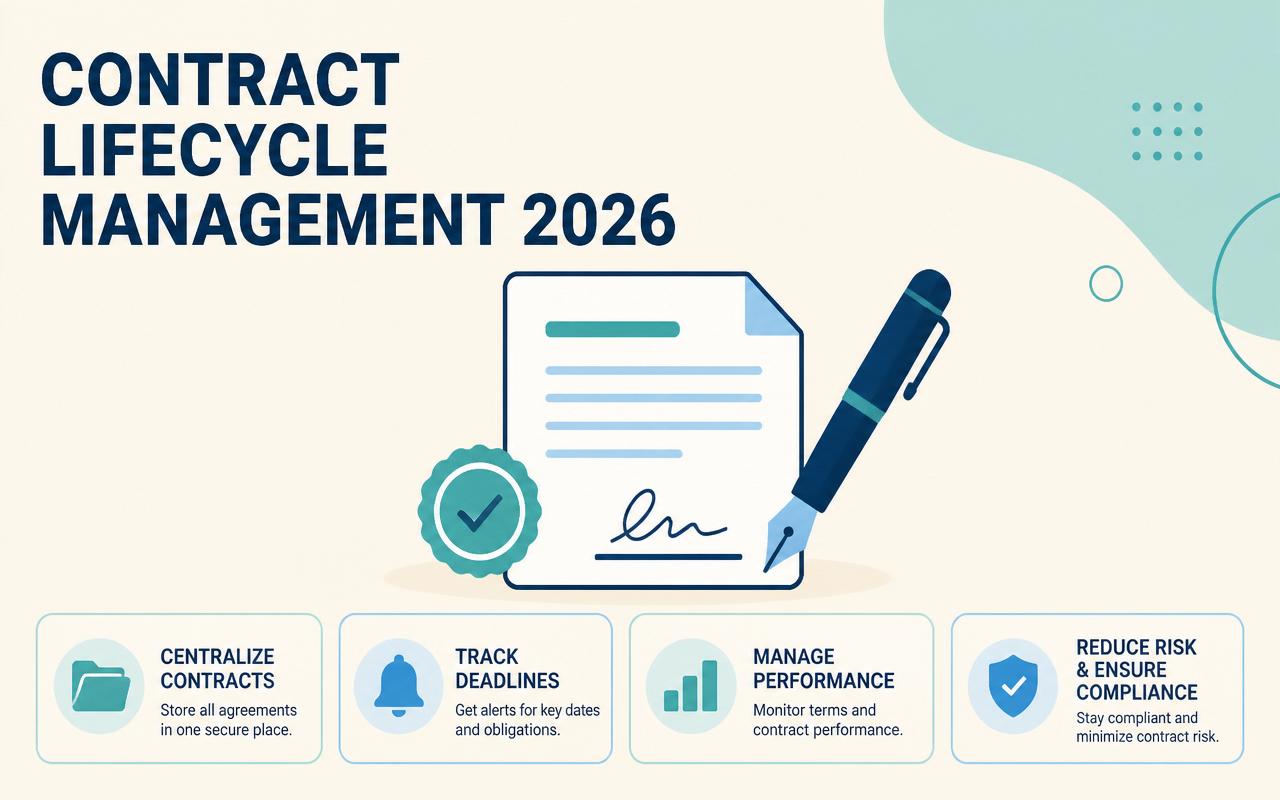
Growing companies usually feel contract pain long before they call it a CLM problem. Sales is pushing paper through email. Legal is redlining the same clauses over and over. Finance cannot find the renewal date in time. Procurement tracks vendor obligations in spreadsheets that drift out of date the moment someone leaves. By 2026, that mess is harder to ignore because contracts touch revenue recognition, AI governance, privacy terms, and vendor risk reviews at the same time. Good contract lifecycle management software gives teams one place to draft, approve, sign, store, search, and renew agreements without building a process around inboxes and shared drives.
Why contract lifecycle management software matters in 2026
The value of CLM is no longer limited to legal efficiency. Growing companies need faster cycle times, cleaner audit trails, and better control over contract data because more business decisions now depend on what is buried in the paper.
- Contract terms now affect AI use, data processing, indemnities, and security commitments, so legal language has direct operational impact.
- Revenue teams expect self-service intake and faster approvals, not a back-and-forth thread for every standard deal.
- Finance and procurement need dependable renewal and obligation tracking to avoid surprise spend and auto-renewal leakage.
- Boards and auditors increasingly expect a searchable contract record with version history, approval logs, and accessible reporting.
- Companies are dealing with more counterparties, more templates, and more regional requirements as they grow across states and countries.
- Workflow automation matters because legal teams are being asked to support more volume without proportional headcount growth.
The 10-12 contract lifecycle management software to watch in 2026
Ironclad
Ironclad is a strong fit when contract operations have outgrown basic routing and the business wants a process layer that legal, sales, procurement, and finance can all use. It stands out when teams want structured intake, clause playbooks, and a more modern workflow experience than older enterprise systems. It is especially useful for organizations that need standard contracts to move quickly while still preserving review controls for exceptions.
- Workflow-driven request intake and approvals
- Clause and template governance
- Repository search and metadata extraction
- Integrations with core business systems
Pricing: contact sales. Best for mid-market and enterprise teams that want a modern CLM with stronger process control across departments.
DocuSign CLM
DocuSign CLM is a practical option for companies already using DocuSign for signature capture and looking to extend that footprint into drafting and approval workflows. It is a sensible choice when signature volume is high and the organization wants one vendor for agreement generation through execution. It also tends to appeal to operations teams that prefer a familiar ecosystem over stitching together separate tools for CLM and e-signature.
- Agreement generation and clause library support
- Approval routing and workflow automation
- Native tie-in with electronic signature workflows
- Repository and reporting capabilities
Pricing: contact sales. Best for teams already standardized on DocuSign that want a single vendor path from document prep to signature.
Icertis
Icertis is built for organizations that treat contracts as structured business assets rather than static documents. It is a fit for larger companies with complicated procurement, revenue, and compliance requirements, especially when contracts need to feed downstream analytics and policy enforcement. The system is generally most compelling when the buyer has enough process maturity to use advanced configuration and data models well.
- Enterprise-grade contract repository
- Obligation and milestone management
- Advanced analytics and contract intelligence
- Configurability for complex business rules
Pricing: contact sales. Best for enterprise buyers with large contract volumes, complex obligations, and strong governance requirements.
Agiloft
Agiloft remains attractive for teams that want deep configurability without being locked into rigid workflows. It is often a better fit than heavier enterprise platforms when the business has unusual approval chains, specialized compliance steps, or multiple contract types that do not follow one neat template. The appeal is flexibility, but that flexibility works best with someone who can own the process design.
- Highly configurable workflow engine
- Contract repository and search
- Clause and template management
- Reporting and dashboarding tools
Pricing: contact sales. Best for operations-led teams that need a configurable system and have the discipline to maintain it.
ContractWorks
ContractWorks is usually a solid short-list candidate for teams that need contract storage, search, reminders, and simple workflow control without buying a large platform. It is commonly easier to deploy than heavier CLMs, which matters for smaller legal teams or departments that are still formalizing their processes. The trade-off is that it is less suited to very complex drafting and negotiation workflows.
- Central contract repository
- Deadline and renewal alerts
- OCR and searchable document storage
- Basic workflow and reporting features
Pricing: contact sales. Best for small and mid-sized teams that need organized contract management more than a full process overhaul.
PandaDoc CLM
PandaDoc CLM works well for companies that want document generation, workflow, and signature in a single, approachable package. It tends to fit revenue teams, agencies, and service businesses that live in proposals, order forms, and simple agreements. The best use case is speeding up quote-to-signature motion without asking users to learn a heavy legal system.
- Document generation and templates
- Approvals and routing
- E-signature and document tracking
- Reusable content blocks and clause snippets
Pricing: contact sales. Best for sales-led organizations and agencies that need light CLM with strong document generation.
Concord
Concord is often a sensible pick for teams that want to move quickly from email-based contracting to a shared, cloud-based process. It is a fit for businesses that need drafting, collaboration, signature, and repository features without a long implementation cycle. Concord tends to appeal to organizations with straightforward contract types and a desire for easier adoption by nonlegal users.
- Online drafting and collaboration
- Version control and redlining
- E-signature support
- Repository search and renewal tracking
Pricing: contact sales. Best for growing companies that want an accessible CLM with a relatively light operational lift.
LinkSquares
LinkSquares is strong where contract visibility and post-signature intelligence matter as much as drafting. Many buyers use it to make existing agreements searchable, extract key terms, and surface renewal or obligation data that has been hiding in PDFs. It can work well for legal teams that need to clean up a legacy contract estate while also improving day-to-day workflow.
- AI-assisted contract analysis and extraction
- Repository and search
- Lifecycle workflow features
- Reporting on clauses, renewals, and obligations
Pricing: contact sales. Best for teams that need strong contract intelligence and better visibility into existing agreements.
Conga CLM
Conga CLM is often selected by organizations already using Conga for document generation or broader revenue operations workflows. It is useful when contract automation needs to connect closely with CPQ, quoting, or downstream revenue processes. That makes it especially relevant for sales operations and finance teams that want fewer handoffs between proposal, contract, and order management.
- Workflow automation and approvals
- Template and clause management
- Integration with revenue operations tools
- Reporting and contract repository capabilities
Pricing: contact sales. Best for revenue-oriented teams that want contract automation tied to the quote-to-cash stack.
SirionLabs
SirionLabs is a stronger fit when the contract problem does not end at signature. It is built around managing obligations, performance, and supplier relationships over time, which is useful for procurement-heavy organizations and managed service environments. If the business cares about service levels, billing accuracy, and contract compliance after execution, SirionLabs deserves attention.
- Obligation and performance tracking
- Supplier and contract compliance management
- Analytics for contract value leakage
- Workflow support for complex commercial arrangements
Pricing: contact sales. Best for enterprise procurement and sourcing teams managing high-value supplier contracts.
Evisort
Evisort is worth a look when a company wants fast visibility into what is already signed and what obligations are buried across contract folders. Its value is strongest in extraction, search, and surfacing contract data that can drive reporting and renewal management. It is often used by teams that need to clean up legacy repositories before they can improve workflow discipline.
- Contract intelligence and metadata extraction
- Repository search across legacy agreements
- Obligation and renewal visibility
- Workflow and reporting tools
Pricing: contact sales. Best for organizations that need to make existing contracts searchable and operational quickly.
Juro
Juro is a good fit for fast-moving teams that want contracting to feel less like a legal bottleneck and more like a collaborative workflow. It is often favored by commercial teams that need templates, approvals, and a browser-based editing experience. For growing companies with limited legal headcount, Juro can reduce friction without forcing a heavy implementation.
- Browser-based contract drafting
- Workflow automation and approvals
- Template and clause management
- E-signature and repository features
Pricing: contact sales. Best for lean legal and commercial teams that want quick adoption and simple day-to-day use.
Comparison table
| Tool | Starting price | Best for | Standout feature |
|---|---|---|---|
| Ironclad | Contact sales | Mid-market and enterprise workflow control | Structured intake and clause playbooks |
| DocuSign CLM | Contact sales | Existing DocuSign customers | Native connection to e-signature workflows |
| Icertis | Contact sales | Large enterprises with complex obligations | Enterprise contract data model |
| Agiloft | Contact sales | Highly customized workflows | Deep configurability |
| ContractWorks | Contact sales | Small and mid-sized teams | Simple repository and reminders |
| LinkSquares | Contact sales | Contract intelligence and repository cleanup | AI-assisted extraction |
| Juro | Contact sales | Lean commercial and legal teams | Browser-based drafting |
How to choose the right contract lifecycle management software
- Map the actual contract volume by type: sales paper, procurement, NDAs, MSAs, renewals, and amendments. A tool that handles one flow well may struggle with the rest.
- Check implementation capacity. Some platforms need a process owner, clean templates, and internal admin time to stay healthy after go-live.
- Test integrations early. At minimum, look at CRM, ERP, e-signature, identity, ticketing, and document storage connections.
- Decide how much contract intelligence you need. If your main pain is search and renewal tracking, you may not need a heavy enterprise workflow platform.
- Review data residency, security, and retention requirements if you operate in regulated industries or across borders.
- Ask for support details in writing, including onboarding scope, response SLAs, admin training, and whether configuration changes require professional services.
Suggested stack by company size
Small business / low budget
Smaller companies usually need speed, reminders, and a repository before they need elaborate clause governance. The right stack keeps signatures simple and makes it hard to lose renewals or signed files. Avoid buying a platform that will sit half-configured because nobody has time to run it.
- ContractWorks
- Juro
- PandaDoc CLM
Mid-market or agency
Mid-market teams usually have enough volume to justify workflow automation, but not enough spare admin capacity for a sprawling implementation. The best fit is a system that can standardize templates, route approvals, and connect to sales tools without forcing everyone into a rigid process.
- Ironclad
- Concord
- DocuSign CLM
- Conga CLM
Enterprise
Enterprise buyers need governance, data visibility, and downstream obligation management. In these environments, CLM has to survive complex approval chains, regional rules, and heavy integration requirements. Buying for future process maturity is reasonable, but only if the implementation team is real.
- Icertis
- Agiloft
- SirionLabs
- Evisort
Trends to watch in contract lifecycle management software for 2026
- Contract data is moving from passive search into structured workflows, so extracted terms can trigger approvals, reminders, and risk reviews automatically.
- Buyers are asking for clause-level controls tied to policy rules, such as which fallback language sales can use without legal review.
- More platforms are handling pre-signature and post-signature work together, which matters when obligations, renewals, and audits live in the same system.
- Integration depth is becoming a buying criterion on its own, especially for CRM, procurement, ERP, and identity tools.
- Vendors are adding better controls for AI-generated drafting and review, including source citation, template enforcement, and permission boundaries.
- Implementation teams are being pushed to prove adoption with user-facing intake forms and self-service workflows rather than just storage and signature.
I learned the hard way that the biggest implementation risk is not the software itself; it is dirty contract data and unclear ownership. On one rollout, the team assumed every executed agreement had a valid counterparty name, renewal date, and template type. It did not. We spent more time normalizing legacy records than configuring the workflow. The other common mistake is letting legal design the system alone. If sales, procurement, and finance do not help define intake fields and approvals, the result is a polished tool nobody uses because it slows them down.
FAQs
What is contract lifecycle management software used for?
It centralizes drafting, approvals, signature, storage, search, renewal tracking, and reporting so contracts are easier to control across legal, sales, procurement, and finance.
How is CLM different from e-signature software?
E-signature tools handle signing. CLM covers the workflow before and after signature, including intake, approvals, version control, repository management, obligation tracking, and renewals.
What size company needs CLM software?
Companies usually start feeling the need once contract volume, approval complexity, or renewal risk becomes hard to manage in email and spreadsheets. That can happen in small businesses, but it is most common in growing mid-market teams.
Which CLM tool is best for a small legal team?
ContractWorks, Juro, and Concord are often easier starting points because they balance core repository and workflow features with simpler adoption requirements.
Should I choose CLM based on AI features?
Not by itself. AI extraction and review help, but only if the system also fits your templates, approval process, integrations, and compliance requirements. Workflow fit matters more than flashy demos.
If you are choosing CLM in 2026, start with the work the business actually needs done this quarter: faster approvals, cleaner renewal visibility, better repository search, or stronger obligation control. Then narrow the field to tools that fit your team size, implementation bandwidth, and integration stack. A system that matches your current operating model will deliver more value than a bigger platform you cannot fully deploy. Shortlist two or three vendors, ask for a process-specific demo using one real contract type, and require them to show intake, redlining, approval routing, signature, and reporting before you make a decision.
Pricing sources
All prices cited in this article are taken from each vendor's official pricing page. Vendors update pricing frequently — always confirm the current rate with the source before purchasing.
Related articles
Fintech Platforms Reshaping Small Business Banking in 2026
2026 guide to fintech platforms for small business banking, with tool comparisons, pricing, and stack advice for operators.
Admin
E-Signature Software for Legal & HR Teams in 2026
Compare e-signature software for legal and HR teams in 2026, with tools, pricing cues, selection criteria, and deployment advice.
Admin
Data Privacy & Compliance Tools for U.S. Businesses in 2026
2026 guide to privacy and compliance tools for U.S. businesses, with practical picks, pricing cues, and a stack by company size.
Admin