Fintech Platforms Reshaping Small Business Banking in 2026
2026 guide to fintech platforms for small business banking, with tool comparisons, pricing, and stack advice for operators.
 Admin
Admin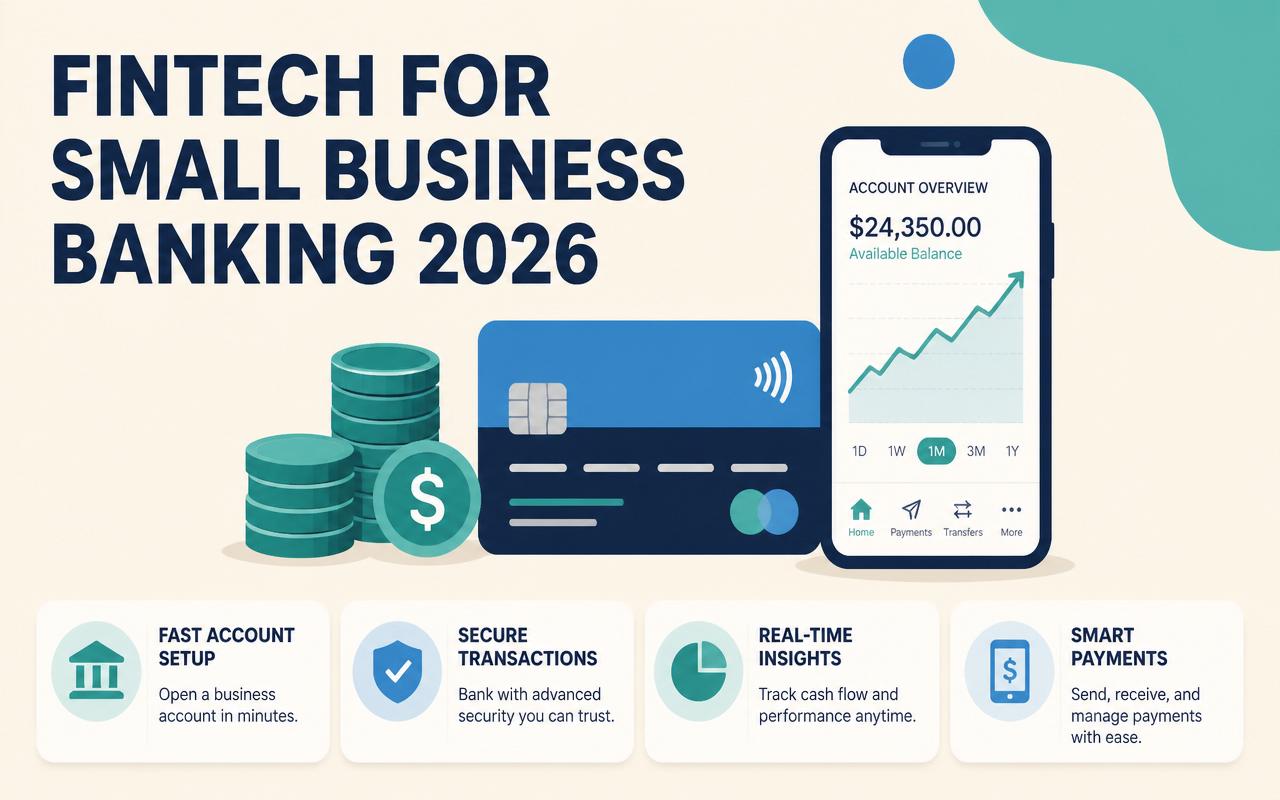
Small business banking stopped being a single checking account problem a few years ago. In 2026, operators are juggling payroll, bill pay, debit controls, virtual cards, AP workflows, cash forecasting, and cross-border transfers from the same stack. That means the real question is not which bank has the nearest branch. It is which fintech platform gives you the fewest manual reconciliations, the cleanest controls for your team, and the least friction when money moves between clients, vendors, and payroll. The wrong setup shows up fast: duplicate cards, messy books, delayed transfers, and a controller spending half the week cleaning up transactions.
Why fintech platforms for small business banking matters in 2026
The best platforms are now closer to operating systems for money than basic accounts. They reduce handoffs, tighten controls, and make accounting cleaner without adding headcount.
- Real-time card issuing and spend limits are replacing reimbursement-heavy workflows for small teams.
- AP automation is moving into banking products, so bill pay, approvals, and ledger exports live in one place.
- More SMBs are holding operating cash in yield-bearing accounts, which changes the cash management decision.
- Cross-border payments are now routine for agencies, SaaS firms, and importers, not special cases.
- Founders want faster onboarding and fewer branch dependencies, especially when they do not have a finance department.
- Finance teams expect native integrations with QuickBooks Online, Xero, NetSuite, and payroll tools, not CSV cleanup.
The 10-12 fintech platforms for small business banking to watch in 2026
Mercury
Mercury works well for startups and online-first businesses that want a modern bank account feel without traditional branch friction. The product is built around fast account setup, clean dashboards, and controls that suit distributed teams. It is especially useful when founders need subaccounts, virtual cards, and straightforward wire handling without turning banking into a separate admin function. Mercury is not trying to be everything for every business; it is strongest when speed, visibility, and online operations matter more than in-person service.
- Business checking and savings structure
- Virtual and physical debit cards
- Team spend controls and approvals
- Accounting integrations and export-friendly transaction data
Pricing: starts around $0/month (verify current pricing). Best for venture-backed startups, software businesses, and online operators that need quick setup and strong digital controls.
Bluevine
Bluevine is a practical fit for owners who want business banking with better cash flow visibility and a clear focus on small business operations. It tends to appeal to companies that move enough money to care about AP, bill pay timing, and interest on balances, but do not want a heavy treasury platform. Bluevine’s structure works well for firms that want a primary operating account plus tools that help them manage short-term working capital without layering on extra software.
- Business checking with yield options
- Bill pay and payment scheduling
- Debit card access and spend controls
- Subaccounts for organizing cash by purpose
Pricing: starts around $0/month (verify current pricing). Best for SMBs that want a banking-first setup with simple cash management and fewer manual finance tasks.
Brex
Brex has moved beyond startup cards into a broader spend, bill pay, and cash management platform. It is a strong option when finance teams want policy controls, tight expense workflows, and reporting that does not fall apart as headcount grows. Brex is especially compelling for companies with distributed spending, travel, software procurement, and multiple approvers. The trade-off is that it fits best when you are ready to run spend with structure; if you want a plain checking account, it can feel like more platform than you need.
- Corporate cards with role-based controls
- Expense management and reimbursements
- Bill pay and approval workflows
- Cash management and accounting integrations
Pricing: contact sales for pricing. Best for startups, scaling SMBs, and finance-led teams that want one system for cards, expenses, and payables.
Ramp
Ramp is built for businesses that want to control spend before it happens, not after the month closes. Its value shows up when finance teams need policy enforcement, vendor spend visibility, and automation around receipts, categorization, and approvals. Ramp tends to work well for teams with recurring SaaS spend, travel, procurement, and a controller who cares about clean books. It is less about being a traditional bank and more about making every dollar easier to govern.
- Corporate cards and purchase controls
- Receipt capture and automatic transaction categorization
- Bill pay and expense policy enforcement
- Accounting and ERP integrations
Pricing: starts around $0/month (verify current pricing). Best for growing companies that want spend management with banking-adjacent controls and strong finance automation.
Novo
Novo is aimed at owners who want a lean business banking account with a small-business-first design. It is especially attractive for solo operators, services firms, and early-stage companies that do not need treasury depth but do need easy setup, clean transaction management, and integration-friendly banking. Novo tends to be a good fit when you care more about running the business than managing a bank relationship, and when the account needs to support digital payments rather than branch activity.
- Business checking account
- Accounting integrations
- Invoice and payment workflows
- Debit card and spend visibility
Pricing: starts around $0/month (verify current pricing). Best for freelancers, microbusinesses, and very small teams that need straightforward banking with low overhead.
Relay
Relay is one of the stronger choices for owners who want cash visibility by purpose, not just one pooled balance. Its multiple-account structure makes it easier to separate operating cash, tax reserves, payroll funds, and client money. That matters for agencies, service businesses, and operators with inconsistent revenue timing. Relay also appeals to finance teams that want clearer approvals and more disciplined money movement without pushing everything into a heavyweight treasury product.
- Multiple business checking accounts
- Spending controls and debit cards
- Payment approvals and role permissions
- QuickBooks Online integration and bookkeeping-friendly exports
Pricing: starts around $0/month (verify current pricing). Best for agencies, consultancies, and service businesses that need better cash partitioning and approvals.
Lili
Lili is designed around the realities of very small businesses that need banking plus bookkeeping support in one place. It works best for owner-operators who want to see spending categories, set aside tax money, and avoid the common mistake of treating business and personal cash as interchangeable. Lili’s appeal is simplicity, especially for businesses that are still light on internal finance process but want enough structure to stay compliant and tax-ready.
- Business banking with tax planning tools
- Expense tracking and categorization
- Debit card access
- Automatic savings buckets for taxes and reserves
Pricing: starts around $0/month (verify current pricing). Best for solopreneurs, contractors, and very small businesses that need lightweight banking and bookkeeping support.
Found
Found is built for independent workers and very small businesses that need banking, bookkeeping, invoicing, and tax estimation in one app. It is particularly helpful for owners who want to stop stitching together separate tools for expenses and quarterly taxes. Found’s strength is reducing the administrative burden that eats into evenings and weekends. It is less suited to a finance team with multiple approvers, but strong for one-person businesses and early side-hustle-to-LLC transitions.
- Business banking and debit card
- Expense categorization and bookkeeping
- Tax estimation and set-aside tools
- Invoice and contractor payment support
Pricing: starts around $0/month (verify current pricing). Best for freelancers, solo founders, and small service businesses that want banking and bookkeeping in one product.
North One
North One focuses on simple business banking with enough automation to keep owners out of manual admin. It is useful for companies that need subaccounts, easy funding categories, and a clean way to separate operating money from reserves. The product is often a fit for service businesses, trades, and small agencies that want an online-first account without taking on an enterprise spend stack. It leans toward operational clarity more than treasury sophistication.
- Business checking account
- Envelope-style money management
- Debit card and payment tools
- Integrations for bookkeeping and transfers
Pricing: starts around $0/month (verify current pricing). Best for small businesses that want simple digital banking with buckets for cash control.
Wise Business
Wise Business is the most useful option on this list when cross-border money movement is routine. If you pay contractors abroad, collect from international clients, or hold funds in multiple currencies, Wise can remove a lot of banking friction. It is not a traditional operating bank replacement for every company, but it is a strong specialist tool for international payments and foreign currency balances. For businesses with global operations, it can sit alongside a domestic bank or fintech account and solve a very specific pain point well.
- Multi-currency accounts
- International transfers with transparent FX
- Local account details in supported currencies
- Debit card for business spending
Pricing: starts around $0/month (verify current pricing). Best for agencies, ecommerce sellers, and import/export businesses with regular cross-border payments.
Rho
Rho is aimed at companies that need banking, cards, AP, and treasury behavior in one operational layer. It tends to be strongest for finance teams that care about visibility, controls, and efficient payment operations as they grow. Rho can be a good fit when you want more structure than a basic business account but less fragmentation than stacking several point solutions. It is especially attractive for teams that want finance workflows tied closely to spend governance and cash management.
- Business banking and treasury tools
- Corporate cards with controls
- Bill pay and AP workflows
- Accounting and ERP integrations
Pricing: contact sales for pricing. Best for scaling SMBs and mid-market teams that want combined banking, spend, and payables workflows.
Chase for Business
Chase for Business remains the comparison anchor because many operators still need a national branch network, lending access, and familiar service coverage. It is less nimble than fintech-native platforms, but it can be the right foundation for businesses that value in-person support, cash deposits, and a traditional banking relationship. For companies with mixed needs, Chase often serves as the stable operating anchor while fintech platforms handle spend controls, subaccounts, or cross-border transfers on top of it.
- Business checking and savings
- Branch and ATM network
- Merchant services and lending options
- Integrated card and payment products
Pricing: contact sales or review current business checking terms. Best for businesses that need branch access, cash handling, and a conventional banking relationship.
Comparison table: fintech platforms for small business banking in 2026
| Tool | Starting price | Best for | Standout feature |
|---|---|---|---|
| Mercury | Starts around $0/month (verify current pricing) | Online startups | Fast digital account setup and clean controls |
| Bluevine | Starts around $0/month (verify current pricing) | Cash-flow-conscious SMBs | Business checking with yield options |
| Brex | Contact sales for pricing | Finance-led scaling teams | Cards, expenses, and cash management in one stack |
| Ramp | Starts around $0/month (verify current pricing) | Spend-control-heavy businesses | Policy enforcement before spend happens |
| Relay | Starts around $0/month (verify current pricing) | Agencies and service firms | Multiple accounts for cash segmentation |
| Wise Business | Starts around $0/month (verify current pricing) | Global payment workflows | Multi-currency accounts and transparent FX |
| Chase for Business | Contact sales or review current terms | Businesses needing branches | National branch and cash-deposit access |
How to choose the right fintech platforms for small business banking
- Match the platform to your dominant money flow: payroll, AP, cards, client collections, or international transfers.
- Check whether your accounting stack needs native sync with QuickBooks Online, Xero, or NetSuite, not just CSV exports.
- Look at who approves spend and payments. A five-person agency and a 50-person services firm need different permission models.
- Confirm whether you need physical cash handling, merchant services, or branch access before dropping a traditional bank.
- Review fee structure beyond the headline price: card replacement, wire fees, FX spreads, ACH limits, and expedited payments matter.
- Ask about support channels and response times, especially if money movement errors would stop payroll or vendor payments.
Suggested stack by company size
Small business / low budget
- Novo
- Lili
- Found
- Wise Business
Mid-market or agency
- Relay
- Bluevine
- Mercury
- Wise Business
Enterprise
- Brex
- Ramp
- Rho
- Chase for Business
Trends to watch in fintech platforms for small business banking for 2026
- Agentic ticket triage that routes account issues, card disputes, and payment exceptions to the right workflow before a human touches them.
- Policy-aware card issuance that creates temporary cards with role, vendor, and project constraints baked in.
- Deeper AP and banking convergence, including bill approvals, payment scheduling, and ledger sync in one product.
- More multi-entity support for businesses running several LLCs or operating brands under one finance team.
- Smarter cash segmentation features that automate tax, payroll, and reserve buckets based on historical flow patterns.
- Tighter controls around instant payments and real-time transfers, because speed without governance creates avoidable errors.
I have seen the same implementation mistake enough times to call it a pattern: teams migrate to a new platform, issue cards first, and leave their accounting mapping for later. That works for about two weeks. Then transactions start posting to the wrong categories, reimbursements duplicate card spend, and the month-end close turns into detective work. The fix is unglamorous. Set up the chart-of-accounts mapping, approval rules, and user roles before the first card is used. Also test one payment flow end to end with your accountant in the loop; the platform may be fine, but the misconfiguration usually lives in the workflow, not the software.
FAQs
Are fintech platforms safe enough to replace a traditional business bank account?
They can be, but only if they fit your operating needs and you confirm the underlying banking partner, FDIC pass-through coverage details, and payment limits. Many businesses use fintech tools alongside a traditional bank instead of replacing one outright.
Which platform is best for startups that need fast setup?
Mercury is often a strong fit for online-first startups because setup is streamlined and the controls are built for distributed teams. Novo and Bluevine can also work for smaller operators with simpler needs.
What is the best option for international payments?
Wise Business is the most direct choice on this list for cross-border transfers and multi-currency balances. For companies that also need domestic banking controls, it often works best as a companion platform.
Do these platforms integrate with accounting software?
Most of them do, but the quality of the integration varies. QuickBooks Online support is common, and some tools also support Xero or ERP exports. Always test transaction sync and merchant categorization before fully switching.
Should I use one platform for everything?
Only if the product covers your core workflows well. Many companies do better with one banking anchor, one spend platform, and one cross-border tool than with a single product that is mediocre at all three.
The right fintech banking setup in 2026 is less about branding and more about operational fit. If you are small, choose something that keeps bookkeeping clean and cash accessible. If you are growing, prioritize approvals, spend controls, and integrations that save your finance team from chasing transactions. If you operate across borders, make sure FX and transfer costs are visible before you move volume. Start by mapping your top three money flows, then compare each platform against those workflows instead of a generic feature checklist. The fastest way to a better setup is to test one account opening, one card issuance, one bill payment, and one accounting sync before you commit.
Pricing sources
All prices cited in this article are taken from each vendor's official pricing page. Vendors update pricing frequently — always confirm the current rate with the source before purchasing.
Related articles
Contract Lifecycle Management Software for Growing Companies in 2026
Compare contract lifecycle management software for growing companies in 2026, including pricing, best-fit buyers, and implementation pitfalls.
Admin
E-Signature Software for Legal & HR Teams in 2026
Compare e-signature software for legal and HR teams in 2026, with tools, pricing cues, selection criteria, and deployment advice.
Admin
Data Privacy & Compliance Tools for U.S. Businesses in 2026
2026 guide to privacy and compliance tools for U.S. businesses, with practical picks, pricing cues, and a stack by company size.
Admin