SEO Software Compared: Ahrefs vs SEMrush vs Moz in 2026
Compare Ahrefs, Semrush, Moz Pro, and other SEO tools in 2026 to pick the right stack for research, audits, content, and reporting.
 Admin
Admin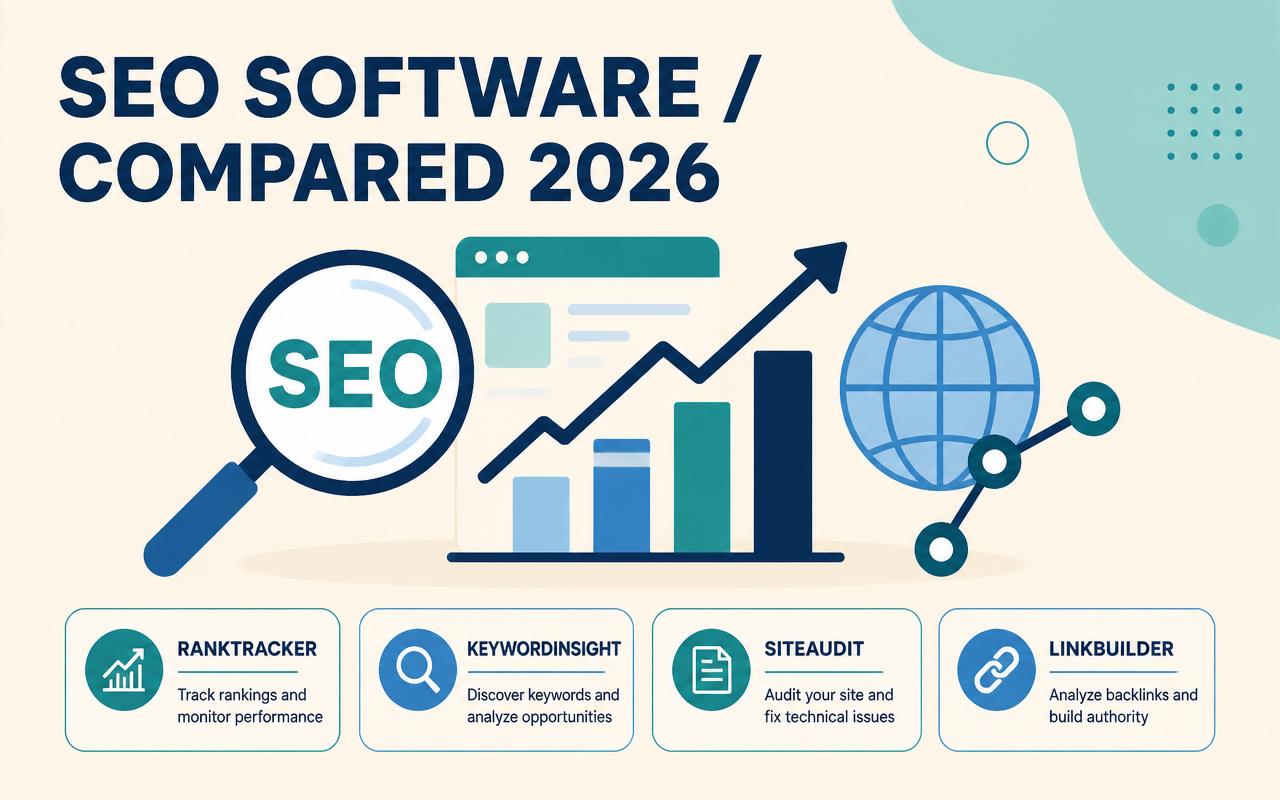
A lot of SEO teams are not short on tools; they are short on a clean operating model. In 2026, the usual failure point is not keyword research quality or crawl depth. It is the handoff between discovery, prioritization, publishing, and reporting. One platform may surface a promising query set, another may flag broken internal links, and a third may suggest content edits, but nobody owns the queue end to end. That creates stale briefs, duplicate fixes, and reporting that looks busy without changing revenue. The right SEO software stack should reduce that friction. It should tell you what to fix, why it matters, who should do it, and whether the work moved the numbers.
Why SEO software matters in 2026
Search teams are dealing with more page types, more SERP features, and more pressure to show business impact. Software matters because manual workflows cannot keep pace with modern site complexity.
- Search results now mix classic blue links with AI summaries, local packs, video results, shopping modules, and discussion content, so visibility has to be tracked across more surfaces.
- Teams need faster technical checks because even modest sites can accumulate indexation problems, canonical conflicts, and internal-link waste after routine CMS changes.
- Content decisions require evidence from both search demand and ranking intent, not just one keyword volume number pulled into a brief.
- Agencies and in-house teams need reporting that ties SEO work to leads, pipeline, or transactions instead of vanity traffic graphs.
- Rank tracking alone is not enough; teams need tools that connect keyword movement to landing page changes, content updates, and technical fixes.
- Vendor overlap is real, so buyers need a stack that avoids paying twice for the same crawl, keyword, or content workflow.
The 10-12 SEO software to watch in 2026
Ahrefs
Ahrefs is a strong fit when link intelligence and content gap analysis sit near the center of the workflow. Its strength is not just backlink data; it is the way teams use that data to prioritize pages, assess competitors, and find where authority is missing. For smaller teams, the interface can feel denser than a simple rank tracker, but that density is useful when one person has to research, audit, and report without bouncing between tools.
- Backlink and referring-domain analysis
- Keyword Explorer for demand and SERP review
- Site Audit for technical issue discovery
- Content gap and competitor comparison workflows
Starts around $129/month (verify current pricing). Best for in-house marketers, consultants, and agencies that need strong link research and practical competitive analysis.
Semrush
Semrush is the broadest all-around platform on this list for teams that want one login for SEO, content, competitive research, and some paid search planning. It is especially useful when marketing leaders want shared visibility across channels and not just a single SEO dashboard. The trade-off is complexity: the platform can do a lot, but buyers need a clear internal owner or they end up with a subscription that is underused and overconfigured.
- Keyword research and SERP analysis
- Site Audit and issue monitoring
- Position tracking and visibility reporting
- Competitive research across organic and paid search
Starts around $129.95/month (verify current pricing). Best for teams that want one platform for SEO operations, content planning, and competitor monitoring.
Moz Pro
Moz Pro still earns a place because it stays approachable for teams that do not need a heavyweight platform on day one. It is often a better organizational fit than people expect when the team is small, the SEO lead wears multiple hats, and reporting needs to be understandable to non-specialists. The product’s value shows up in the basics done consistently rather than in flashy extras.
- Keyword research and rank tracking
- Site crawl and on-page checks
- Link metrics and authority-style scoring
- Reporting for smaller teams and stakeholders
Starts around $39/month (verify current pricing). Best for small businesses and lean marketing teams that want a simpler SEO suite.
SE Ranking
SE Ranking is often the value play for teams that need a mix of rank tracking, audits, and local or agency-style reporting without paying for the biggest platform in the category. It tends to work well when buyers care about coverage and flexibility more than prestige. The product is especially practical for agencies managing multiple clients because it supports structured reporting and enough depth to keep most accounts on one system.
- Rank tracking with location-level visibility
- Website audit and on-page monitoring
- Competitor research and keyword discovery
- White-label and client reporting options
Starts around $55/month (verify current pricing). Best for agencies, local SEO teams, and budget-conscious in-house marketers.
SurferSEO
SurferSEO is built for content teams that need a repeatable way to align briefs, outlines, and optimization work with what currently ranks. It is not a full SEO suite, and that is the point; it is more of a content operations layer than a broad research platform. Teams get the most value when they already know what pages they want to win and need to tighten the editorial process around those targets.
- Content Editor with term and structure guidance
- Content audit and optimization recommendations
- Brief creation workflows
- Integration with writing and publishing processes
Starts around $99/month (verify current pricing). Best for editorial teams, SEO content managers, and agencies producing optimized content at volume.
Sitebulb
Sitebulb is a strong technical SEO choice for teams that want crawl output they can explain to developers. Its value is in turning site complexity into prioritized, visual findings rather than dumping raw issue lists on a spreadsheet. That makes it especially useful when the SEO lead has to present fixes to engineering or product without losing the thread of the diagnosis.
- Desktop and cloud crawl options
- Technical issue prioritization
- Visual reports for stakeholder reviews
- Internal linking and site architecture analysis
Starts around $18.39/month (verify current pricing). Best for technical SEOs, consultants, and agencies doing deep audits.
Screaming Frog
Screaming Frog remains a workhorse for technical audits because it is fast, flexible, and unglamorous in exactly the right way. It is not trying to be a strategy suite; it is trying to expose site issues accurately enough for an experienced SEO to act on them. If your team regularly checks redirects, canonicals, duplicate content, metadata, and broken assets, this is still one of the most efficient tools to keep around.
- Desktop crawler for URL-level site analysis
- Redirect, meta, and response code checks
- Custom extraction and integration options
- Log file and JavaScript rendering support
Starts around £199/year for the paid version (verify current pricing). Best for technical SEOs and agencies that need a powerful crawler with low overhead.
Ubersuggest
Ubersuggest is a practical entry-level choice for owners and small teams that want affordable keyword ideas, basic audits, and a simple view of how a site is performing. It is not usually the answer for complex enterprise SEO, but it can be enough for local businesses and early-stage teams that need a starting point rather than a sprawling suite. The appeal is accessibility, not depth.
- Keyword suggestions and content ideas
- Site audit basics
- Rank tracking and overview reporting
- Competitive and backlink snapshots
Starts around $12/month (verify current pricing). Best for solo operators, startups, and small businesses with limited SEO maturity.
Serpstat
Serpstat is a useful middle-tier platform for teams that want broad SEO coverage without going straight to the most expensive enterprise stack. It tends to appeal to buyers who care about both keyword research and competitive monitoring, especially in multi-market environments. The interface and feature set are broad enough for day-to-day work, though teams should test data quality against their own markets before committing.
- Keyword and competitor research
- Rank tracking and visibility metrics
- Site audit and page-level checks
- Batch analysis and reporting workflows
Starts around $59/month (verify current pricing). Best for growing marketing teams that need a balanced feature set.
Mangools
Mangools is a clean fit for smaller teams that want straightforward keyword research and rank tracking without a steep learning curve. It is especially appealing when the user base includes founders, general marketers, or small agencies that need something usable on week one. The product is lighter than the major suites, but that can be an advantage when the team wants speed and clarity more than exhaustive depth.
- Keyword research with simplified difficulty scoring
- Rank tracking
- SERP and competitor review
- Backlink and site profile tools
Starts around $29.90/month (verify current pricing). Best for small businesses and freelancers who want an easy SEO toolkit.
Clearscope
Clearscope is built for teams that care about the quality of the page after the keyword is chosen. It works well when content production is already disciplined and the remaining problem is consistency: are writers covering the right entities, headings, and related terms for the query intent? It is not a full SEO platform, but it can materially improve editorial quality when used as part of a clear workflow.
- Content grading and optimization guidance
- Keyword and topic term recommendations
- Briefing support for writers and editors
- Workflow fit for editorial teams
Starts around $189/month (verify current pricing). Best for content-led companies and teams publishing SEO pages at a high standard.
Google Search Console
Google Search Console is not optional; it is the base layer. No third-party suite replaces first-party impressions, clicks, queries, indexing signals, and page-level performance data from Google. The limitation is that it is diagnostic, not strategic. It tells you what happened in Google Search, but it does not give you the broader competitive or workflow features that paid platforms provide. Every stack should start here, then add tools around the gaps.
- Performance reporting by query and page
- Index coverage and page indexing signals
- Sitemaps and technical status checks
- Core Web Vitals and manual action notices
Free. Best for every site owner, SEO lead, and agency regardless of budget.
Comparison table
| Tool | Starting price | Best for | Standout feature |
|---|---|---|---|
| Ahrefs | Starts around $129/month (verify current pricing) | Link research and competitive analysis | Deep backlink intelligence |
| Semrush | Starts around $129.95/month (verify current pricing) | Broad SEO and marketing teams | All-in-one competitive workflow |
| Moz Pro | Starts around $39/month (verify current pricing) | Small teams and beginners | Simple, approachable SEO suite |
| SE Ranking | Starts around $55/month (verify current pricing) | Agencies and value-conscious teams | White-label reporting |
| Sitebulb | Starts around $18.39/month (verify current pricing) | Technical SEO audits | Visual technical reporting |
| Screaming Frog | Starts around £199/year (verify current pricing) | Deep crawling and site checks | Fast desktop crawler |
| Google Search Console | Free | All site owners | First-party search data |
How to choose the right SEO software
- Match the tool to the main job. If you need backlink research, prioritize Ahrefs. If you need a broader marketing suite, Semrush may be the better fit. If technical audits are the pain point, look at Screaming Frog or Sitebulb first.
- Size the workflow to the team. A solo consultant needs speed and simplicity. An agency needs multi-client reporting and repeatable audits. An enterprise team needs permissions, governance, and fewer manual exports.
- Check data coverage in your target markets. Some tools perform better in the U.S. than in smaller regions or niche verticals, so test the keywords and competitors that matter to your business.
- Review integrations before you buy. Look for connections to Google Search Console, analytics platforms, Looker Studio, Slack, or your content management system if reporting and handoffs matter.
- Consider the cost of adoption, not just license price. A cheaper tool that no one uses is more expensive than a pricier platform that becomes the daily operating system.
- Ask how the tool supports your review cadence. Weekly rank checks, monthly technical audits, and quarterly strategy reviews need different output formats.
Suggested stack by company size
Small business / low budget
For a small business, the goal is to get enough data to make decisions without paying for features that sit unused. Keep the stack lean and use tools that are easy to explain to non-specialists.
- Google Search Console
- Ubersuggest
- Moz Pro
- Mangools
Mid-market or agency
Mid-market teams and agencies usually need a more structured stack. The priority is coverage across research, technical fixes, and reporting, plus enough flexibility to handle multiple stakeholders or clients.
- Google Search Console
- Ahrefs
- SE Ranking
- Screaming Frog
- SurferSEO
Enterprise
Enterprise SEO tends to fail when data lives in too many places and no one owns the escalation path. The best stack supports governance, technical depth, and a clear reporting layer for executives and channel leads.
- Google Search Console
- Semrush
- Ahrefs
- Sitebulb
- Clearscope
Trends to watch in SEO software for 2026
- Query clustering that groups intent by theme, not just by shared keywords, so content teams can plan around page types instead of individual phrases.
- Issue prioritization that factors in business impact, crawl frequency, and template scope so technical teams stop fixing low-value errors first.
- SERP feature tracking that separates classic rank movement from visibility inside local packs, video results, shopping units, and AI-generated answer surfaces.
- Workflow-native content briefs that move from keyword set to outline to draft review without rekeying the same data into multiple systems.
- Automated change detection that alerts teams when metadata, canonicals, internal links, or indexability shift after a deployment.
- Role-based reporting templates that send technical findings to developers, content edits to editors, and executive summaries to leadership without one custom deck for everyone.
I learned the hard way that the tool is rarely the real bottleneck; the setup is. On one client rollout, we connected a crawler, a keyword platform, and Search Console, but nobody standardized URL naming, page-type labels, or how redirects were handled in exports. The result was three reports that all looked correct in isolation and still failed to reconcile. We also over-assigned access, which made it too easy for non-SEO stakeholders to treat raw metrics as decisions. The fix was boring but effective: one source of truth for URLs, one owner for issue triage, and one reporting layer with very clear definitions.
FAQs
Is Ahrefs better than Semrush in 2026?
It depends on the job. Ahrefs is often stronger for backlink research and competitive link analysis. Semrush is usually better if you want a broader SEO and marketing suite with more all-purpose workflows.
What is the best SEO software for a small business?
For a small business, Moz Pro, Mangools, or Ubersuggest can be enough if you want simpler workflows. Google Search Console should still be the foundation of the stack.
Do I need both Screaming Frog and Sitebulb?
Not usually. Many teams choose one crawler and standardize on it. Screaming Frog is better for fast, flexible crawling. Sitebulb is stronger when you want more visual reporting and prioritization.
Which tool is best for content optimization?
SurferSEO and Clearscope are the strongest fits on this list for content optimization. SurferSEO is useful for editorial workflows and content briefs. Clearscope works well when you want more editorial quality control.
Can Google Search Console replace paid SEO software?
No. Search Console is essential, but it only shows Google-owned performance and indexing data. Paid tools add keyword research, competitive analysis, technical auditing, and reporting workflows that Search Console does not cover.
If you are choosing between Ahrefs, Semrush, and Moz Pro in 2026, start with the problem you need solved every week, not the feature list. Link research, broad marketing visibility, content optimization, technical auditing, and budget all point to different answers. Most teams get better results from one well-run primary platform plus a crawler and Google Search Console than from three overlapping subscriptions. Pick the stack that fits your operating rhythm, then standardize how URLs, priorities, and outcomes are tracked. If you are evaluating vendors this month, run a live test on one site, one competitor set, and one reporting cycle before you commit.
Pricing sources
All prices cited in this article are taken from each vendor's official pricing page. Vendors update pricing frequently — always confirm the current rate with the source before purchasing.
Related articles
Online Survey & Feedback Tools: Best Options for Customer Insights in 2026
Compare the best online survey and feedback tools for 2026, with pricing, use cases, features, and a practical buyer’s guide.
Admin
Customer Loyalty & Rewards Platforms for Retail Brands in 2026
Compare 2026 loyalty and rewards platforms for retail brands, with pricing, features, use cases, and selection advice.
Admin
Social Media Management Platforms: A 2026 Buyer's Guide
Compare 12 social media management platforms for 2026, with pricing, best-fit use cases, and a practical buyer framework.
Admin